







 Tally Services
 Tally Customization
 Tally Implementation
 Tally Integration
 Tally Manpower Solutions
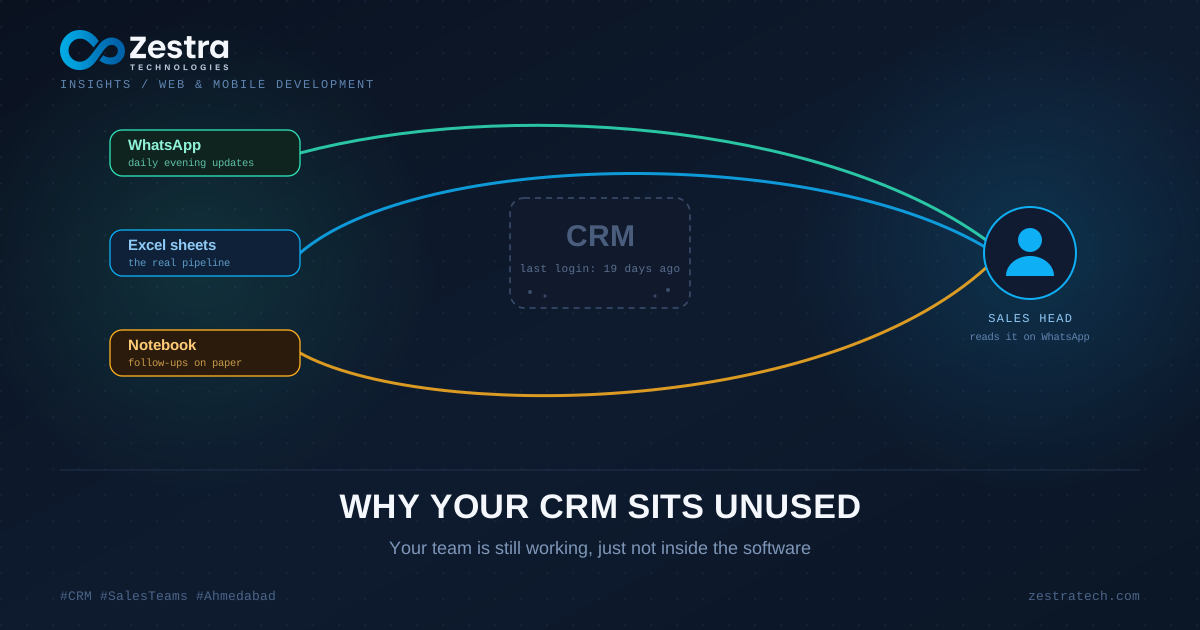
The sales head at a machinery distributor in Naroda told us something we hear a lot. "We bought the CRM in January. By June, my team was back to sending me their numbers on WhatsApp every evening."
Nobody had banned the CRM. Nobody had complained loudly about it. It just slowly became the thing people updated on Fridays, half from memory, right before the review meeting. Which meant the data inside it was already stale by the time anyone looked at it, and so nobody trusted it, and so nobody bothered to fill it in properly. A quiet loop, and a very expensive one.
The Software Usually Isn't the Problem
When a CRM fails, the first instinct is to blame the tool. Too complicated, too many fields, wrong vendor. Sometimes that's fair. But in most cases we've looked at, switching to a different CRM would have produced the exact same result within a year, because the real issue sat somewhere else.
It sat in how the CRM got chosen, who it was built for, and what happened the week after the training session ended.
It Was Bought for the Boss, Not the Team
Ask who requested the CRM in most companies and the answer is a founder or a sales head who wants visibility. They want to see the pipeline, forecast revenue, know who's working on what. All completely reasonable things to want.
Now ask the salesperson what the CRM does for them personally. Often the honest answer is: nothing. It's extra typing so someone else can see a report. Their own follow-ups still live in their phone, their notes still live in a notebook, and the CRM becomes a chore they do for management.
A CRM that survives is one the salesperson would miss if it disappeared. Maybe because it reminds them who to call today, or pulls up a customer's full history before a meeting so they don't look unprepared. If the tool doesn't make the daily job easier for the person entering the data, they will enter as little as they can get away with.
Too Many Fields on Day One
We once reviewed a setup where logging a single lead meant filling twenty-three fields. Twenty-three. Somebody had sat in a meeting and asked what information might ever be useful, and every answer became a mandatory field.
The result was predictable. People filled in the bare minimum, or put "NA" in everything they could, and the reports built on top of that data were meaningless. Starting with five or six fields that people will actually fill honestly beats a beautiful form nobody completes. You can always add more later, once the habit exists. Removing mandatory fields after people have learned to ignore them is much harder.
Training Happened Once
A two-hour training session on launch day does not create a habit. People nod, forget half of it by Thursday, and quietly work around whatever confused them. Nobody wants to admit in front of the group that they didn't understand something.
The companies where adoption sticks tend to do something less glamorous. Someone owns the CRM internally, a real person with real time set aside, who sits with team members individually in the first few weeks, answers small questions, and notices who has stopped logging in. That person matters more than any feature on the vendor's comparison chart.
Nobody Checked Whether Leadership Used It
This one is uncomfortable but it's real. If the boss asks for updates on WhatsApp, or reviews the pipeline from a separate spreadsheet, the team learns immediately what actually counts. People follow what gets looked at, not what gets announced.
The distributor in Naroda fixed this with a simple rule. Pipeline reviews happen only from the CRM screen, no exceptions, no exported sheets. Within three weeks the data quality changed, because suddenly what was entered there mattered.
It Didn't Fit How the Business Actually Sells
Off-the-shelf CRMs assume a certain sales process. Lead comes in, gets qualified, becomes an opportunity, gets a quote, closes. Plenty of Indian businesses don't sell like that. Maybe repeat orders matter more than new leads. Maybe dealers and distributors sit between you and the end customer. Maybe half your deals depend on a site visit and a technical drawing before any quote exists.
When the software's stages don't match reality, people either bend their work to fit the tool, which is slow and irritating, or ignore the tool. Neither ends well. Sometimes the right answer is configuring the CRM properly around your real process. Sometimes it's a custom-built system, and sometimes it's a lighter tool than you thought you needed.
If You're Already Six Months In
Don't rush to replace it. Sit with three or four of the people who use it least and ask, without any defensiveness, what would make it useful to them. The answers are usually specific and fixable: a report they wish existed, a field that's confusing, a reminder that never fires. Fix those first.
If you're still choosing a system, spend more time watching how your team actually works than comparing feature lists. Our CRM and ERP development team starts every project by shadowing the people who will use the system daily, not just interviewing the person paying for it. It changes what gets built.
And if your CRM is already gathering dust and you'd like a second pair of eyes on why, get in touch. Often the fix is smaller than the frustration suggests.