







 Tally Services
 Tally Customization
 Tally Implementation
 Tally Integration
 Tally Manpower Solutions
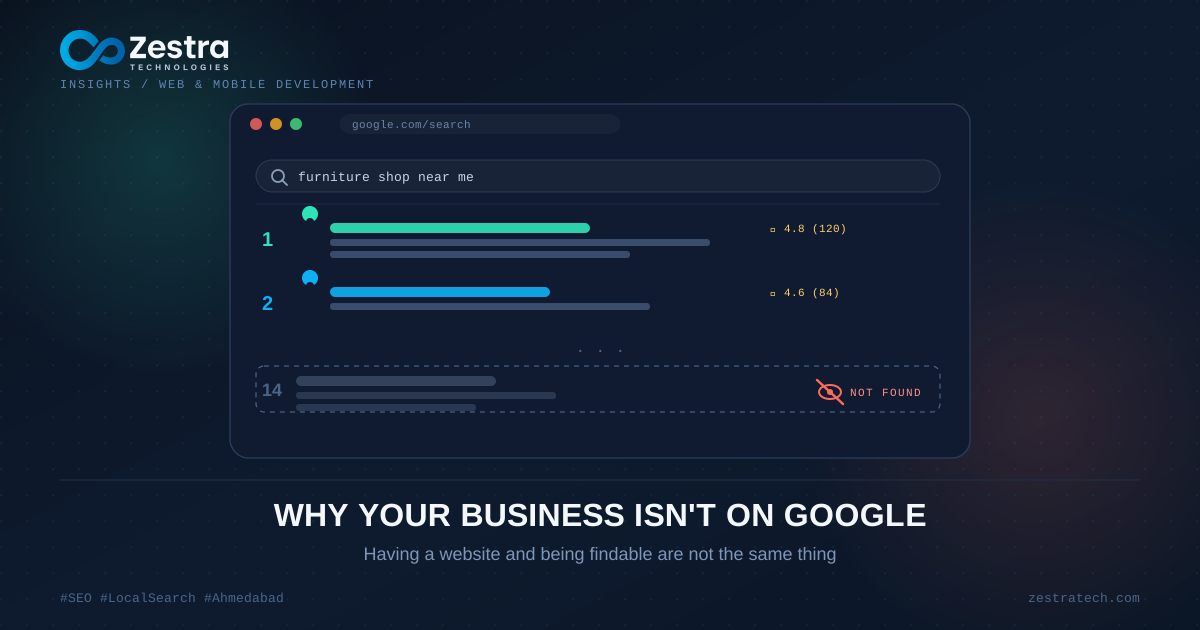
A furniture showroom owner in Ahmedabad once showed us his phone mid-conversation. He'd searched his own shop's name on Google, sitting inside the shop, and couldn't find it on the first page. A competitor two streets away, with what he insisted was a worse product line, showed up right at the top with photos, reviews, and a map pin.
He'd paid for a website eight months earlier. Nice design, mobile friendly, all his products listed. He genuinely believed that was the job done. This is probably the single most common misunderstanding we run into, and it's worth untangling properly instead of glossing over it.
Having a Website Is Not the Same as Being Findable
A website is a building. Search visibility is whether anyone knows the building exists and can find directions to it. You can construct the most beautiful showroom in the city, but if it's not on any map and nobody's ever heard of the street, foot traffic won't happen on its own.
Most small business websites in India get built, launched, and then left alone. No one goes back to check if Google actually indexed the pages, whether the business shows up for the searches real customers are typing, or whether the Google Business Profile even got claimed and filled out properly. The website exists. It's just invisible.
The Google Business Profile Gets Ignored Almost Every Time
This is the part that surprises people most. For local searches, "furniture shop near me" or "best furniture Maninagar," Google leans heavily on your Business Profile, not your website. That's the panel with your photos, hours, reviews, and map location that shows up before the regular search results even load.
A huge number of businesses either never claim this listing, fill it out once and abandon it, or leave basic details wrong, like an old address or outdated hours. Meanwhile the competitor showing up above them has recent photos, has responded to every review, and posts updates a few times a month. That gap alone accounts for a large share of the visibility difference between two businesses selling the exact same thing.
Thin Content Doesn't Rank, No Matter How Nice It Looks
A homepage that says "Welcome to XYZ Furniture, quality products since 2005" with a product gallery looks fine to a human visitor. To Google, there's almost nothing there to understand what you actually sell, who it's for, or why someone should choose you over the next result.
Businesses that actually rank well tend to have pages that answer specific questions their customers are already searching. Not vague brand copy, but content built around real questions: what's the price range for a particular product, how does delivery work in your city, what materials or brands do you carry. This is also exactly where a blog becomes useful for reasons beyond just having fresh content, it's a direct way to capture searches your homepage never will.
Site Speed Quietly Kills Rankings
A site that takes six or seven seconds to load on a phone, which is extremely common with older or poorly optimized websites, loses a meaningful chunk of visitors before the page even finishes rendering. Google factors this into ranking directly now, not just as a nice-to-have. A site built years ago on a bloated template, stuffed with unoptimized images, is often fighting an uphill battle before content or keywords even enter the picture.
Reviews Matter More Than Most Owners Realize
Review count and recency genuinely influence both rankings and click-through rates. A business with four reviews from three years ago looks less trustworthy, to both customers and to Google's algorithm, than one with forty recent reviews, even if the underlying business quality is identical. Actively asking satisfied customers to leave a review, right after a good experience, is one of the highest-leverage things a small business can do and one of the most neglected.
What Actually Moves the Needle, In Order
If you're starting from close to zero visibility, this is roughly the order that produces results fastest:
- Claim and fully complete your Google Business Profile, accurate hours, real photos, correct categories.
- Build a habit of asking for reviews after every good transaction, not occasionally.
- Fix obvious site speed issues, oversized images are usually the biggest offender.
- Add genuinely useful pages that answer specific customer questions, not just generic "about us" copy.
- Make sure your business name, address, and phone number are consistent everywhere online, directories, social media, your website footer.
None of this is exotic. It's mostly patient, unglamorous work that most businesses skip because it doesn't feel as tangible as a website redesign.
Where This Leaves You
If you already have a website and you're still invisible on search, the fix usually isn't rebuilding the site. It's the unglamorous groundwork most agencies rush past to sell you a redesign instead. Our SEO and digital marketing work starts with exactly this kind of audit, figuring out what's actually blocking visibility before recommending anything.
Want an Honest Look at Why You're Invisible?
If you want an honest look at why your business isn't showing up, reach out and we'll tell you what we actually find, even if the answer is a few small fixes rather than a big project.