
 Tally
Tally Tally Customization
 Tally Implementation
 Tally Integration
 Tally Manpower Solutions






A clinic owner in Vastrapur asked us to add an AI chatbot to her website because a competitor had one. When we asked what she wanted it to actually do, she paused. She hadn't thought that far. She just knew everyone seemed to be adding one and didn't want to fall behind.
This conversation happens constantly right now, and it's worth slowing down on, because the honest answer is that a chatbot helps some businesses enormously and does almost nothing for others, and the difference has very little to do with the technology itself.
What a Chatbot Is Actually Good At
Strip away the hype and a chatbot is good at one core thing: answering repetitive questions instantly, at any hour, without a human having to type the same response for the two hundredth time.
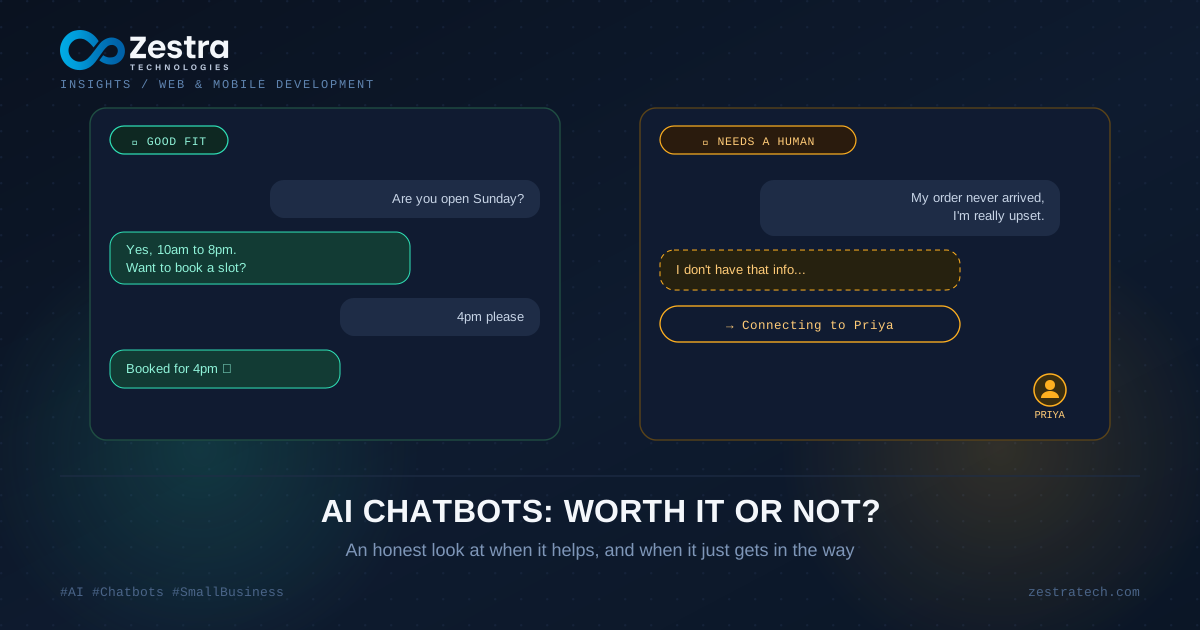
If your business gets the same five or six questions constantly, what are your hours, do you deliver to a certain area, what's the price range for a service, is a product in stock, a chatbot genuinely saves real time and catches customers who would otherwise bounce off your site at 11pm when nobody's around to answer WhatsApp.
Booking and scheduling is another strong use case. A chatbot that can check availability and confirm a slot without a back-and-forth conversation removes real friction, especially for service businesses where phone tag is the norm.
What a Chatbot Is Genuinely Bad At
This is the part vendors selling chatbots tend to gloss over. A chatbot handling anything emotionally sensitive, a patient asking about a medical concern, a customer upset about a delayed order, tends to frustrate people faster than no chatbot at all. Nobody wants to negotiate with a bot when they're already annoyed.
It's also weak at anything genuinely custom. If a customer's question doesn't fit the patterns it was built for, a badly implemented chatbot loops them in circles or gives confidently wrong answers, which damages trust more than an honest "let me connect you to someone" ever would.
And a chatbot with no clear handoff to a real person is often worse than useful. The businesses that get real value build in a clean escape hatch, the moment a question gets complicated or emotional, a real human picks it up, ideally without the customer having to repeat themselves.
The Clinic Owner's Actual Situation
Once we talked through it, her front desk was fielding the same appointment-availability question dozens of times a day, mostly outside clinic hours, and losing a fair number of people who just gave up waiting for a WhatsApp reply. That's a genuinely strong chatbot use case. What she didn't need was a chatbot trying to field symptom questions or anything resembling medical advice, that gets handed straight to a human, always.
We built her something narrow on purpose: check availability, book a slot, answer the six most common logistics questions, hand off everything else immediately with the conversation history intact so nobody has to repeat themselves. Simple, but it actually solved her real bottleneck instead of chasing a feature because a competitor had one.
Questions Worth Asking Before You Build One
- What are the actual repetitive questions costing you time right now? If you can't list five or six without thinking hard, a chatbot may be solving a problem you don't really have yet.
- What happens when it doesn't know the answer? If there's no clean handoff to a human, you're better off with a well-organized FAQ page than a chatbot that frustrates people into leaving.
- Who's going to keep it updated? A chatbot trained on your services, pricing, and hours needs updating whenever those things change. An abandoned chatbot answering with outdated information is worse than none at all.
- Does your business have moments where empathy actually matters more than speed? Healthcare, anything involving complaints, anything financial, these need a much more careful design, if a chatbot belongs there at all.
Where This Actually Pays Off Fastest
Based on what we've built and seen work, the clearest wins are for businesses with high volumes of simple, repetitive queries and clear business hours that don't match when customers are actually browsing. Real estate inquiries, restaurant reservations and menu questions, retail stock checks, appointment booking for straightforward services.
The common thread is questions with clear, factual answers that don't require judgment or empathy to handle well.
Our Honest Take
We'll build you a chatbot if it solves a real, specific bottleneck. We'll also tell you not to if what you actually need is a better FAQ page or a faster response process for your existing WhatsApp, because that's sometimes the truer fix and costs a fraction as much.
Not Sure a Chatbot Is Your Answer? Ask Us First.
If you're weighing whether one makes sense for your business, talk to us about what's actually eating up your team's time first. That conversation is free, the chatbot doesn't have to be the answer we land on.